

In 2026, Toyoda Gosei was named a KENKO Investment for Health Stock. Each year, Japan’s Ministry of Economy, Trade and Industry and the Tokyo Stock Exchange jointly recognize listed companies that show outstanding commitment to employee health. Toyoda Gosei was the only company selected in the transportation equipment category, which includes many major automakers.
This recognition reflects years of steady work. In 2016, the company marked the start of a stronger focus on employee health. Ten years of continued effort have shaped its approach today.
At the heart of that approach is a simple belief: people do their best work and make quality products when they are healthy and full of energy. Good health is also the foundation for happiness at work. This belief guides everything the company does to support employee well-being.
We brought together representatives from Human Resources and the Health Promotion Office, along with employees at different stages of their careers, for an open conversation about health and working life.
-- Meet the participants
Kazumi Inoue — Health Promotion representative
Health Promotion Office, Safety & Health Promotion Division
Mayumi Furuta — Human Resources representative
Labor Relations Office, Human Resources Division
Masaki Takezawa — Senior employee
Healthcare Business Promotion Office, New Value Business Headquarters
Ayumi Tokumasu — Mid-career employee
New Domain Material Development Office, Material Development Division, Research and Development Headquarters
Tomoko Suzuki — Early-career employee
Public Relations Office, General Administration Division
Contents
- 1.A decade of commitment to employee health leads to recognition
- 2.From joining the company through their 60s: Health education at every key milestone
- 3.Cafeterias, apps, and challenges: Making health part of everyday life
- 4.Helping everyone stay healthy throughout their lives: Toyoda Gosei’s vision for the future
1.
A decade of commitment to employee health leads to recognition
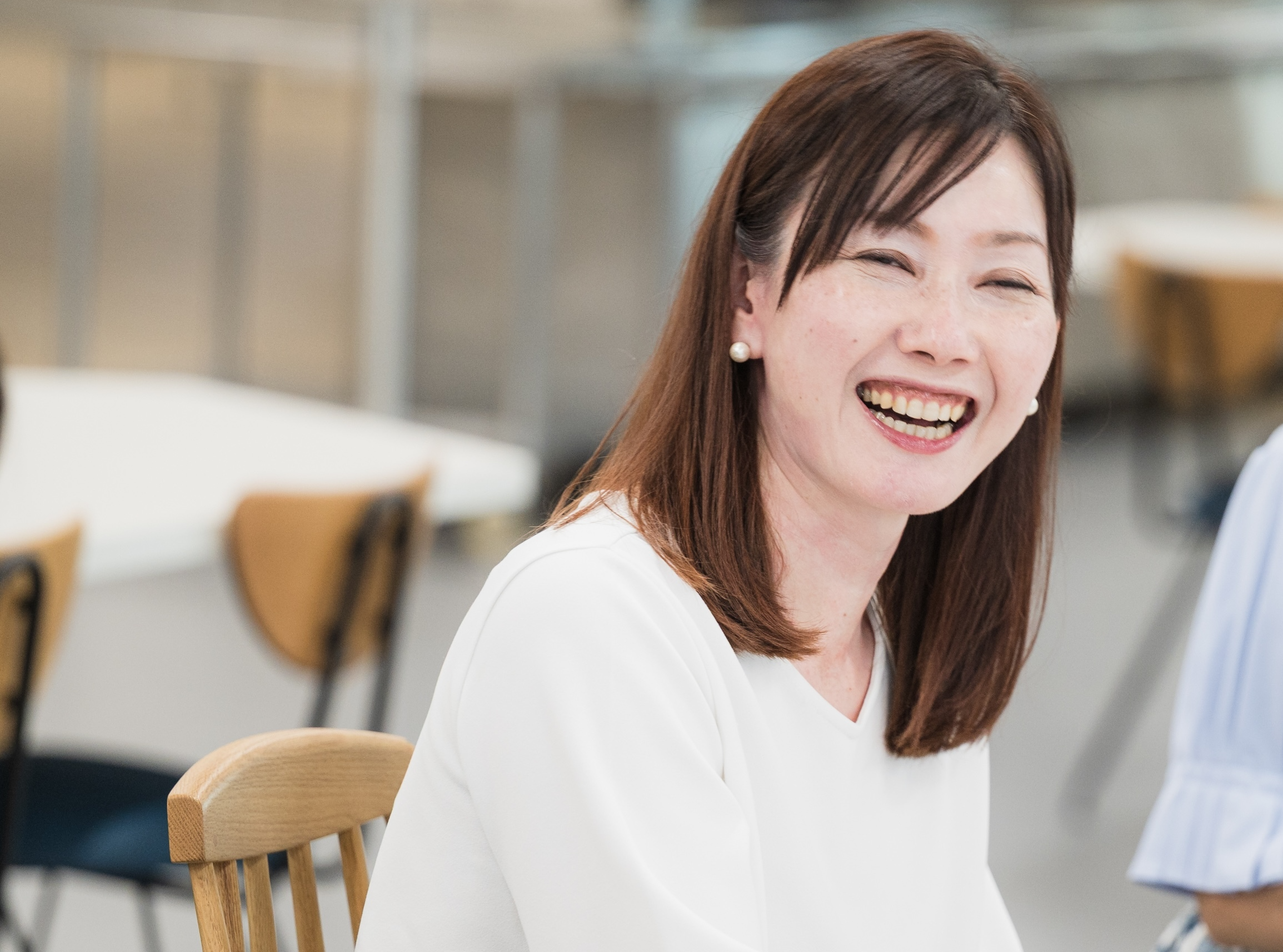
Kazumi Inoue, Health Promotion Office, Safety & Health Promotion Division
Could you tell us how Toyoda Gosei began taking a more structured approach to employee health and well-being?
“The turning point came in 2016, when Japan introduced a national recognition program for organizations with strong employee health initiatives.
We had already been promoting employee health, but we tended to keep those efforts low-key. As the government began emphasizing employee health as an important business strategy, we felt we should also do more to communicate our efforts outside the company. We made 2016 the starting point for this stronger focus.”(Inoue)
We had already been promoting employee health, but we tended to keep those efforts low-key. As the government began emphasizing employee health as an important business strategy, we felt we should also do more to communicate our efforts outside the company. We made 2016 the starting point for this stronger focus.”(Inoue)
What do you think led to Toyoda Gosei’s selection as a 2026 KENKO Investment for Health Stock?
“It was not one major initiative. The recognition reflects work we have built up steadily, including follow-up support after health checkups, health education, and mental health support. Some of that work began well before 2016. I also think our efforts to develop healthcare as a business may have helped.”(Inoue)
What structure do you have in place within the company to support employee health and well-being?
“Our Health and Happiness Promotion Council meets four times a year, bringing together Human Resources, the Health Promotion Office, the labor union, and the health insurance association. Each group has a different role, but we regularly come together around the same table to share health checkup data and information about workplace conditions, and to discuss what steps we should take next.
I think this way of working together across organizational boundaries toward the shared goal of employee health is characteristic of Toyoda Gosei.”(Furuta)
I think this way of working together across organizational boundaries toward the shared goal of employee health is characteristic of Toyoda Gosei.”(Furuta)
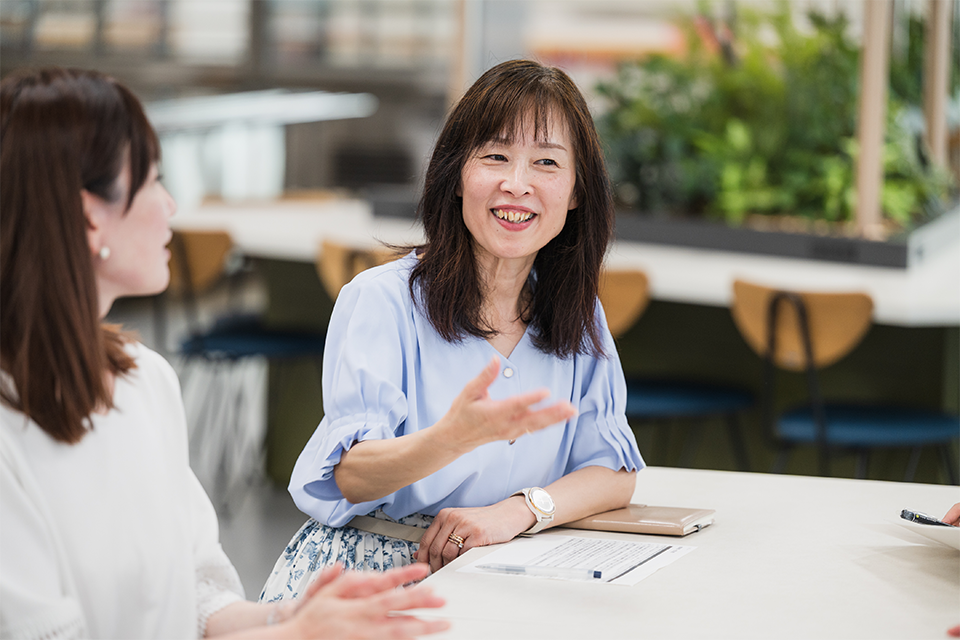
Mayumi Furuta, Labor Relations Office, Human Resources Division
Could you tell us about the meaning behind “happiness” in the name “Health and Happiness Promotion Council”?
“Health means more than simply being free from illness. What we really want is for employees to feel happy and energized at work. That is why we included “happiness” in the council’s name.”(Inoue)
“Employee engagement is one way we measure our progress. Our target is an engagement score of 75% by 2030, a level that would put us among the top 10% of manufacturers in Japan.
Our employee engagement score has risen from 49% in 2021 to 62% this year. Although we are making steady progress, we still have a long way to go to reach 75%. We have deliberately set such an ambitious target because we know that making real change requires a serious commitment.”(Furuta)
Our employee engagement score has risen from 49% in 2021 to 62% this year. Although we are making steady progress, we still have a long way to go to reach 75%. We have deliberately set such an ambitious target because we know that making real change requires a serious commitment.”(Furuta)
2.
From joining the company through their 60s: Health education at every key milestone
You offer health education programs at key milestones, from joining the company through employees’ 60s. Could you describe them?
“Learning about health is not something you do just once. We want employees to keep checking their own health and thinking about what they need to pay attention to at each stage of life. That is why we offer programs at key milestones. Our programs focus on building healthy daily habits for new employees, preventing metabolic syndrome for those in their 30s, and developing physical fitness and good sleep habits to help those in their 40s manage physical and mental fatigue.
For employees in their 50s and 60s, with the retirement age now extended to 65, we offer sessions to help them accurately assess their current fitness levels and learn how to maintain them without overexerting themselves.”(Inoue)
For employees in their 50s and 60s, with the retirement age now extended to 65, we offer sessions to help them accurately assess their current fitness levels and learn how to maintain them without overexerting themselves.”(Inoue)
How do employees respond to these programs?
“There is one comment we hear from every age group: “I wish I’d known this sooner.”
We sometimes wonder whether younger employees will feel that health issues are relevant to them yet, but they listen very carefully. The older the participants are, however, the more weight those words carry, reflecting a sense of regret about not having taken action earlier in life. That is why I believe it is so important to keep providing health education from an early stage in employees’ careers.”(Inoue)
We sometimes wonder whether younger employees will feel that health issues are relevant to them yet, but they listen very carefully. The older the participants are, however, the more weight those words carry, reflecting a sense of regret about not having taken action earlier in life. That is why I believe it is so important to keep providing health education from an early stage in employees’ careers.”(Inoue)
Could you share your thoughts on the Career Design Training you attended at age 55?
“It was a valuable opportunity at age 55 to reflect on my career, finances, and health together. The program included fitness tests, radio taiso, Japan’s broadcast exercise routines—and brain exercises, all of which helped me better understand my current condition.
We also learned that moving in the same way we did when we were younger can lead to injury. That made me realize the importance of adjusting how I move as I get older. I hadn’t expected the program to cover so much.”(Takezawa)
We also learned that moving in the same way we did when we were younger can lead to injury. That made me realize the importance of adjusting how I move as I get older. I hadn’t expected the program to cover so much.”(Takezawa)
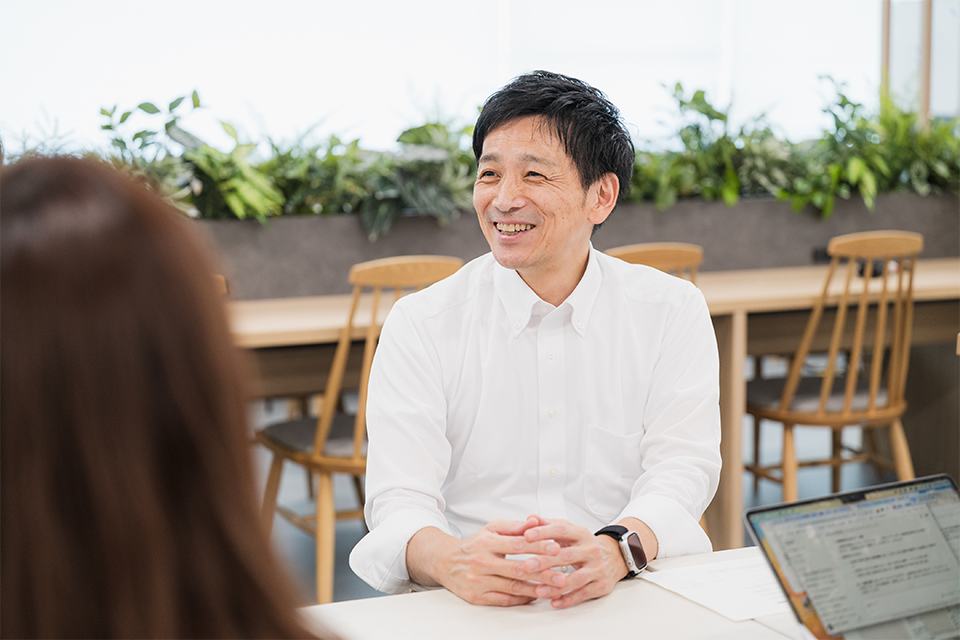
Masaki Takezawa, Healthcare Business Promotion Office, New Value Business Headquarters
3.
Cafeterias, apps, and challenges: Making health part of everyday life
It is striking how many of your initiatives are rooted in everyday life, from Health Challenge 8 and the Health UP Rangers program to improvements to cafeteria menus. Why do you place such importance on small, practical steps in daily life?
“Gradually becoming more aware of health in everyday life is more likely to lead to lasting habits than a short burst of effort. That is why we create opportunities throughout the year for employees to think about their health as part of their daily routines.
Each initiative, whether a health exhibition in the cafeteria or a health promotion activity within a workplace team, may seem small on its own. Together, however, they give employees regular chances to think about their health. I believe the most important thing is to keep creating those opportunities.”(Inoue)
Each initiative, whether a health exhibition in the cafeteria or a health promotion activity within a workplace team, may seem small on its own. Together, however, they give employees regular chances to think about their health. I believe the most important thing is to keep creating those opportunities.”(Inoue)
“I used to think of the cafeteria as just a place to eat. Before I knew it, it had also become a place where I thought about my health. When you pay, the checkout display shows the nutritional balance of your meal. One day, I saw how high the salt content was and got quite a shock! (Laughs.)
That was the day I decided to limit my favorite ramen to once a week. Seeing the numbers really does change how you think.”(Suzuki)
That was the day I decided to limit my favorite ramen to once a week. Seeing the numbers really does change how you think.”(Suzuki)
“I try to get enough protein because I’m concerned about anemia. The cafeteria clearly labels dishes that are high in protein, which makes choosing much easier. Compared with when I joined the company, the cafeteria has a lot more to offer now.”(Tokumasu)
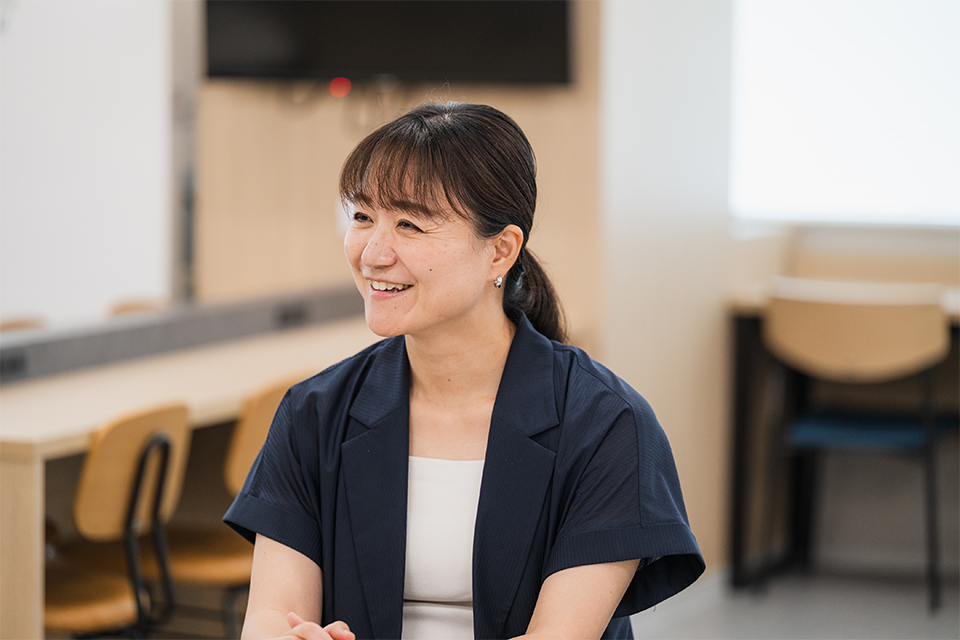
Ayumi Tokumasu, New Domain Material Development Office, Material Development Division, Research and Development Headquarters
Could you explain how the Health UP Rangers program works?
“We ask one person in each department to take the lead in promoting health. Messages from our office can easily be brushed aside as “just another health update,” but people respond differently when the information comes from a colleague in their own department.
Each month, we post a health column written by our public health nurses and registered nurses on Teams, and the Rangers share it within their departments. We put together each column ourselves, covering topics such as sleep, diet, and seasonal health advice.”(Inoue)
Each month, we post a health column written by our public health nurses and registered nurses on Teams, and the Rangers share it within their departments. We put together each column ourselves, covering topics such as sleep, diet, and seasonal health advice.”(Inoue)
“The monthly updates from our Ranger are full of useful information. As I read the seasonal advice and simple food tips, I found myself rethinking my own habits. I think the information is easier to take in because it comes from someone I know.”(Suzuki)
The Vitality health app, introduced in fiscal 2026, has also been getting a lot of attention.
“Vitality is an app provided by Sumitomo Life that lets users earn points based on their step counts and heart rate over the course of a week. Once they reach their weekly points target, they can spin a prize wheel for a chance to win rewards such as drink vouchers.
The app also has a game element: users can form teams, check one another’s step counts, and encourage each other. It has been very well received, with 44% of all employees signing up in just four months since its introduction. Our president, Mr. Saito, also uses the app on his morning walks, and we run company-wide events such as ‘TG Vitality Leaders: Challenge Mr. Saito.’”(Furuta)
The app also has a game element: users can form teams, check one another’s step counts, and encourage each other. It has been very well received, with 44% of all employees signing up in just four months since its introduction. Our president, Mr. Saito, also uses the app on his morning walks, and we run company-wide events such as ‘TG Vitality Leaders: Challenge Mr. Saito.’”(Furuta)
“I teamed up with colleagues in my department, and we enjoyed some friendly competition as we checked each other’s step counts. It was fun sending each other “Well done!” stickers whenever someone reached their goal.
Conversations with colleagues would shift from work to health, and I felt it changed the way we communicated in the workplace. It made me realize that taking care of your health can be something you enjoy and keep up over time.”(Suzuki)
Conversations with colleagues would shift from work to health, and I felt it changed the way we communicated in the workplace. It made me realize that taking care of your health can be something you enjoy and keep up over time.”(Suzuki)
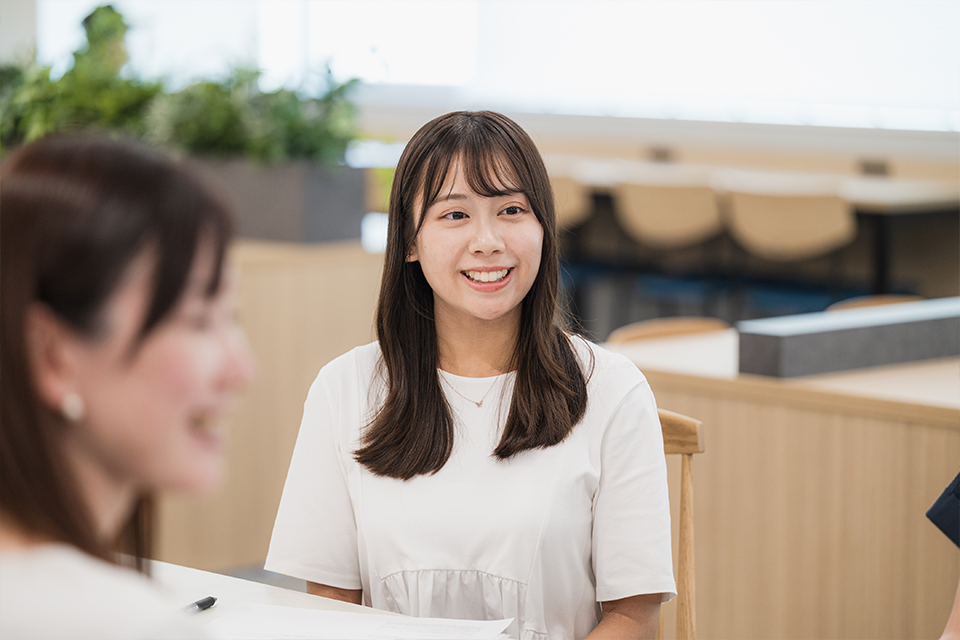
Tomoko Suzuki, Public Relations Office, General Administration Division
4.
Helping everyone stay healthy throughout their lives: Toyoda Gosei’s vision for the future
In your role at the Healthcare Business Promotion Office, what do you see beyond the company’s current employee health initiatives?
“Our team explores the latest technologies that could be used in preventive healthcare. For example, we offer cancer risk tests to employees and have worked with the health insurance association to introduce a service that helps them manage their blood sugar at home.
When we share information about these initiatives, employees in their 20s and 30s sometimes tell us, “I’d like my parents to use these services too.” Their concern for their parents’ health suggests that they are also beginning to take their own health seriously. I feel that interest in preventive healthcare is steadily growing across all generations.”(Takezawa)
When we share information about these initiatives, employees in their 20s and 30s sometimes tell us, “I’d like my parents to use these services too.” Their concern for their parents’ health suggests that they are also beginning to take their own health seriously. I feel that interest in preventive healthcare is steadily growing across all generations.”(Takezawa)
“It is very reassuring to have that kind of support close at hand. Knowing there is somewhere at work you can turn to when you need help makes a real difference.”(Tokumasu)
“I only started going to the gym in my 40s, and I’ve been able to keep going thanks to the company’s flexible benefits program, which lets me use points to help cover gym fees. My main message to younger colleagues is to make full use of this support while they are young.”(Takezawa)
Looking back on today’s discussion, what reflections or messages would you like to share?
“Work takes up a large part of our lives, and I believe the company has a responsibility to make that time fulfilling, both physically and mentally. Whether it is a meal in the cafeteria or a learning opportunity tailored to a particular stage of life, everything we do ultimately serves that purpose. We want to keep building on these efforts so that they have a positive impact on employees and their families alike.”(Furuta)
“I believe good health is the foundation that enables people to work with energy and enthusiasm. Toyoda Gosei values employees’ initiative, and we make a point of listening closely to individual voices and noticing small changes. I see that as one of our strengths. This allows us, as health professionals, to give each person attentive, personal support and remain fully committed to their well-being. Promoting health is an ongoing effort, and we want to keep making progress together with our employees.”(Inoue)
“Our team’s slogan is “Join Toyoda Gosei and become healthier.” It may sound ambitious, but we are serious about achieving it. Working at the forefront of preventive healthcare, we want to create an environment where employees can stay healthy throughout their lives, rather than only responding after they become ill. We see our mission as introducing new technologies and steadily expanding what we can do to make that possible.”(Takezawa)
“As a woman engineer, I have spent 18 years with the company, balancing work with raising children along the way. Looking back, both the company’s support programs and the workplace atmosphere have changed considerably since I joined. There are more women in the workplace now, and I feel it has become easier to seek advice and support. Hearing about the range of initiatives today made me look forward to seeing how the company will continue to evolve.”(Tokumasu)
“Today’s discussion made me realize that health is something to think about today, not just in the future. Hearing from colleagues further along in their careers really brought home how the habits we build when we are young can benefit us 10 or 20 years later. I believe society as a whole would be better off if everyone could stay physically and mentally healthy throughout their working lives. I hope readers of this article will share at least some of that feeling.”(Suzuki)
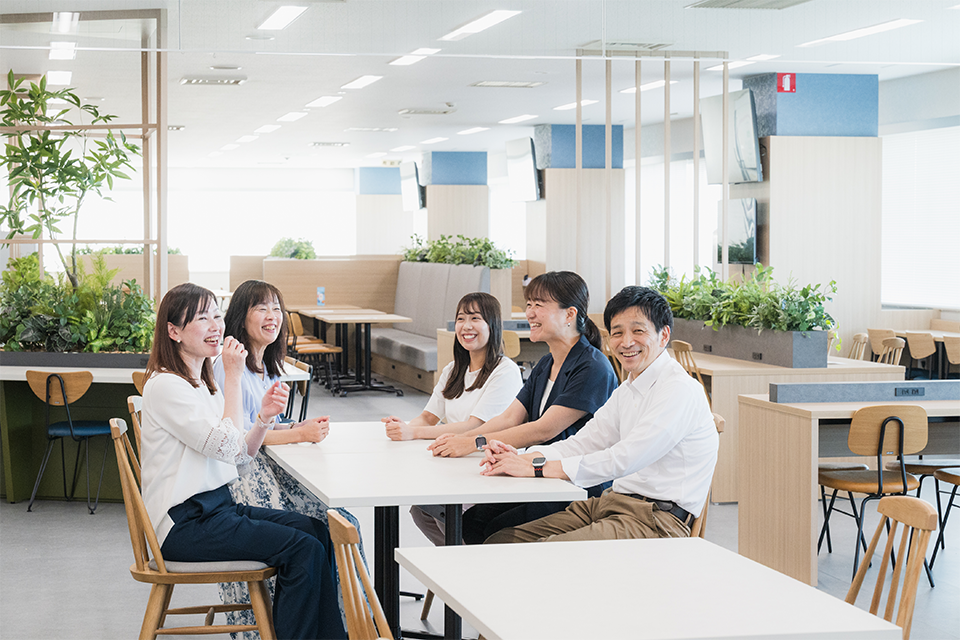
“I wish I’d known this sooner.” These words came up time and again during the discussion. Hearing the same sentiment from employees of different generations suggests that Toyoda Gosei’s initiatives are reaching people on a personal level. Having access to this supportive environment early in one’s career is particularly valuable.
Good health is the foundation for happiness at work. Toyoda Gosei’s commitment to building that foundation for every employee continues.
Good health is the foundation for happiness at work. Toyoda Gosei’s commitment to building that foundation for every employee continues.